Look Beyond The Bank Balance.
Real estate, a closely held business, insurance, jointly owned assets and trust interests may belong in the analysis. Probate paperwork does not, by itself, tell the complete federal tax story.
 THE TAX CUTTERY®
Tax Preparation · Tax Planning · Tax Resolution
The Responsibility You Inherited
A home. A business. A lifetime of decisions. When you are the person responsible for what comes next, the tax questions deserve a clear place to begin.
Understand the estate tax return, identify the deadlines and consider what portability could mean for the surviving spouse. Start with the facts. Keep the family in view.
The initial consultation is free. No purchase required. Estate tax preparation and planning are separately engaged.
The ordinary Form 706 filing deadline runs from the date of death.
General federal filing threshold for a U.S. citizen or resident; the gross estate and relevant prior taxable gifts matter.
No estate tax due does not automatically mean there is no reason to file.
A Clear File Begins With The Right Questions
Real estate, a closely held business, insurance, jointly owned assets and trust interests may belong in the analysis. Probate paperwork does not, by itself, tell the complete federal tax story.
Record the date of death, identify filing and payment deadlines and check whether an extension is needed. A filing extension and a payment extension are different questions.
Coordinate statements, appraisals, prior gifts and ownership records. A defensible file is built from evidence and the applicable rules, with clear responsibilities for the executor, attorney and valuation professionals.
The Question A Threshold Alone Cannot Answer
Consider a hypothetical married U.S.-citizen decedent in 2026 whose gross estate and relevant prior taxable gifts are below the federal filing threshold. A surviving spouse may still benefit from electing portability of an available unused exclusion.
That election generally calls for a timely, properly prepared Form 706. Its value depends on the family’s circumstances; it does not happen simply because the couple was married.
Illustration only. Portability does not transfer GST exemption. Do not treat conditional late-election relief as a reason to postpone the ordinary deadline.
Gather What You Have. Identify What Is Missing.
You do not need every answer to start the consultation. Begin with the date of death, your role and the immediate concern. The next step is a secure, organized file.
Keep private identifiers and documents out of public messages. The firm’s secure intake collects the records after the initial conversation.
Estate Tax. Portability. Practical Next Steps.
Form 706 is the United States Estate (and Generation-Skipping Transfer) Tax Return. The executor uses it to report federal estate tax and certain GST tax matters. An eligible estate may also file it to elect portability for a surviving spouse, even when a return is not otherwise required.
No. For a U.S. citizen or resident who dies in 2026, the general federal filing threshold is $15 million. The filing test considers the gross estate and relevant prior taxable gifts, not simply cash left after debts. A return can also be filed to elect portability. Other years and nonresident noncitizens have different rules.
Not necessarily. The probate inventory and the federal gross estate are different. Some jointly held property, insurance, trust assets and prior transfers may need consideration under federal estate tax rules. Ownership, retained rights and the applicable inclusion rules matter.
Portability allows an eligible surviving spouse to use a deceased spouse’s unused estate and gift tax exclusion, called DSUE. Electing it generally requires a timely, properly prepared Form 706. It is not automatic, and it does not transfer the deceased spouse’s GST exemption.
The ordinary deadline is nine months after the date of death. A timely Form 4768 can obtain a six-month extension to file. Weekends, legal holidays and applicable relief can matter. Do not wait until the income tax return is due to check the estate tax deadline.
Not automatically. Estate and GST tax generally are due nine months after death. Payment extensions and installment elections have separate requirements. A six-month filing extension alone does not authorize postponing a tax payment.
Some estates not otherwise required to file Form 706 may qualify for simplified relief under Revenue Procedure 2022-32 by filing a complete, properly prepared return by the fifth anniversary of death and meeting its other requirements. This is not a general five-year filing deadline. Estates with a required return cannot use that procedure.
No. Form 706 addresses estate and certain transfer taxes. Form 1041 reports income earned by an estate or trust. The decedent’s final Form 1040 is another separate return. The same estate can have several different filing responsibilities.
Federal estate reporting generally begins with fair market value at death, subject to applicable elections and special rules. A property-tax assessment or a family agreement is not automatically the right value. Appropriate appraisals and ownership records can be important.
No. Alternate valuation is an election with specific conditions, including generally reducing both the gross estate and the combined estate and GST tax payable. It is not a free choice of the lowest value for each asset. Review eligibility before relying on a later valuation date.
Prior Forms 709, taxable gifts, exemption use and elections can affect the estate tax computation and available exclusion. Transfers involving retained rights or certain recent transactions may also require review. Keep the gift history with the estate’s records rather than reconstructing it from memory.
They can. A federal Form 706 filing threshold does not determine every state’s filing requirement or tax. Residence, property location and the applicable state law need separate review. Tell the firm about property and connections in every relevant state.
Start with the date of death, death certificate, appointment documents, will and trusts, asset ownership and date-of-death statements, insurance, debts and prior gift tax returns. Identify missing valuations and any surviving-spouse portability records. The initial consultation helps organize the concern before secure document collection.
Yes. The prerecorded initial tax consultation is free, and no purchase or paid appointment is required to begin. Book ownership is optional for return preparation and required for Tax Advisory. Return preparation, research and written advice are separately engaged; probate administration, legal drafting and appraisals are separate professional roles.
Read the IRS Estate Tax FAQs ↗ and Form 706 Instructions ↗
The Foundation Behind Better Questions
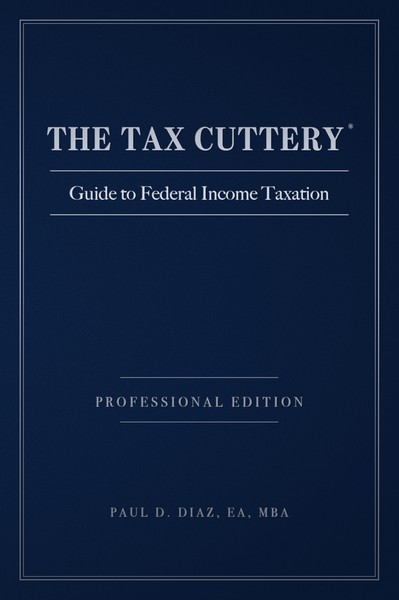
THE TAX CUTTERY® Guide to Federal Income Taxation, Professional Edition.
When family responsibilities change, tax knowledge becomes practical. Understand the broader federal income tax picture, recognize the records that matter and approach the next conversation with better questions.
The Guide is the foundation behind the practice. Specialized estate and GST rules, legal administration and valuations still need the applicable sources and appropriately defined professional work.
Already own a copy? Register Your Copy →
A Place To Begin
The free prerecorded consultation gathers the date of death, your role and the questions behind the paperwork. It is an intake conversation, not a live appointment or free written tax opinion.
Genesis continues the secure intake when applicable. The estate file should connect ownership, gifts, valuations and the people involved.
Preparation, research and Tax Advisory are separate engagements. Book ownership is optional for preparation and required for Tax Advisory. Paid live time is booked separately if needed.
THE TAX CUTTERY® is an independent federal tax practice. General education is not a determination of filing obligations or an accepted engagement. Probate administration, legal drafting and appraisal services are separately arranged with the appropriate professionals.